November 19, 2025 – January 14, 2026
The MAIN, 24266 Main St, Santa Clarita, CA 91321
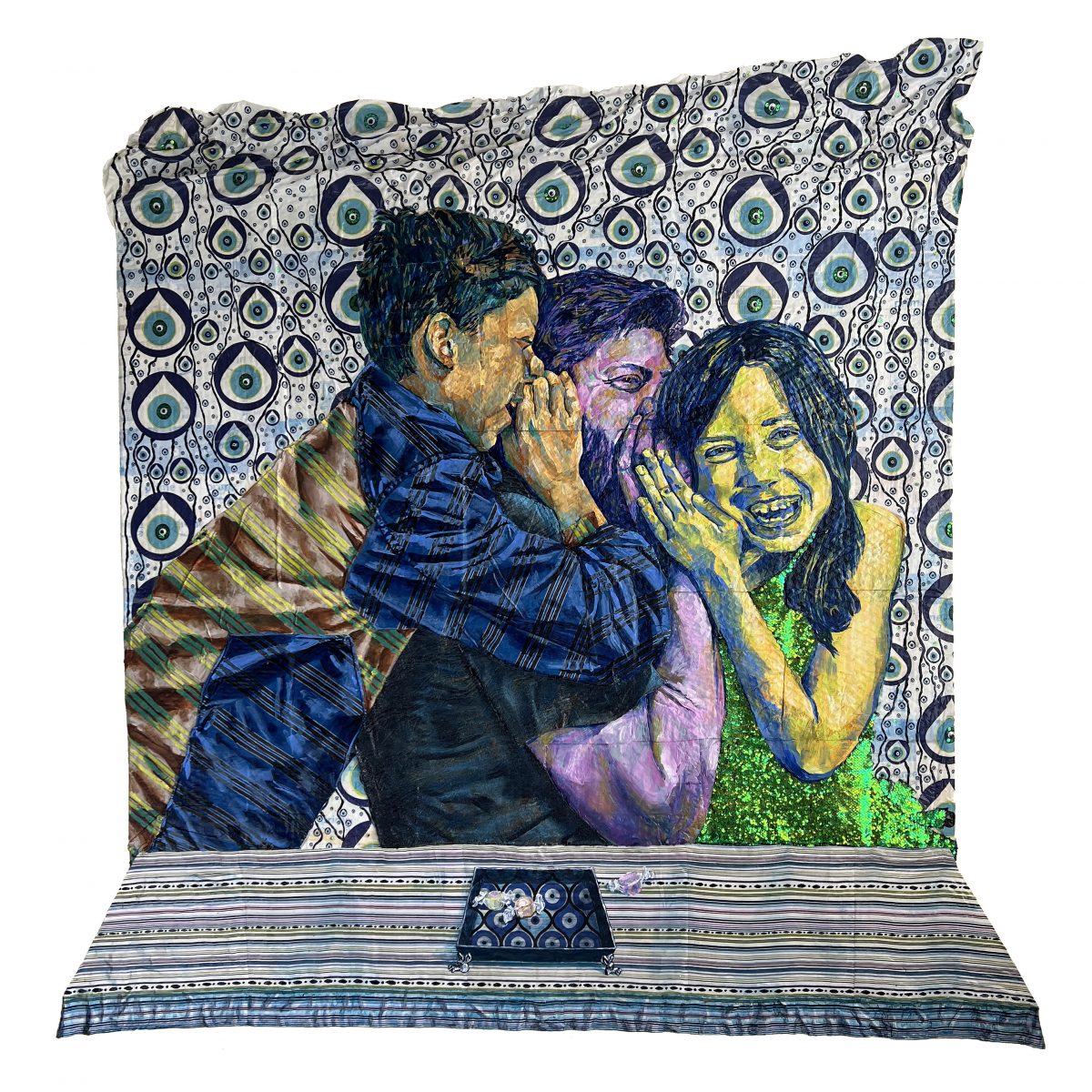
The City of Santa Clarita is proud to announce its latest art exhibition, “Persona Grata: Portraits” by Heidi Brueckner on view at The MAIN (24266 Main Street) now through January 14, 2026. This collection features large-scale, colorful oil and mixed-media figurative paintings that explore humankind’s understanding of itself and its relationship to storytelling.
Brueckner’s bold portraits present individual narratives through self-presentation, gesture, and expression, inviting viewers to reflect on the universal act of observing others as a way of better understanding ourselves. Her assertive use of color is intentionally divorced from naturalism and used as a metaphor for shared Humanity. The work is further animated through unconventional surfaces, including unstretched canvas, recycled bubble mailers, and found materials that billow slightly when hung, adding movement and texture to each piece.
Drawing from an empathetic, documentary-like approach, Brueckner honors the dignity of her subjects while simultaneously disrupting traditional portraiture with unexpected spatial relationships, sculpted fabrics, sequins, and other playful mixed media elements. Her practice blends contemporary expression with socio-environmental awareness, integrating post-consumer materials as both artistic texture and commentary on interconnectedness, value, and sustainability.
The featured artwork attached to this release is entitled “It’s Raining Love” by Heidi Brueckner.
Q&A with Heidi Brueckner
How do you usually start your creative process?
“I usually start with choosing a human subject either from life or from a personal photo. I may do some initial compositional sketches to get an idea of the overall form of the design. I then do a fair amount of intuitive work searching for mixed media materials or substrates and developing color schemes for each section of the work which I feel are appropriate to my overall vision.”
What is the best piece of advice you’ve received as an artist?
“Hang in there! Just keep doing what you want. Not everyone will get or like your work—that’s ok. Trends in the art world come and go. Maybe at one point your work will align with it, maybe not. Do it for yourself and as a way to enrich your life. That is the most important part of artmaking.”
Do you have any tips for artists starting out?
“Do what you love to do and plan for spending time working at getting better at it. Set a schedule for creating art. That dedication I believe becomes apparent in the work. Having said that, it’s easy to feel that you are not doing enough if you can’t dedicate yourself to art full-time. I have learned to set realistic, and therefore achievable, goals and expectations for myself. Meeting those goals feels very productive and puts me into a healthy mindset. I can then choose to surpass those realistic goals if I am able, which also feels great. Apply for as many art opportunities as you can and look at it as a numbers game. There will be a certain (larger) percentage that you will fail at and there will be some (smaller) percentage that will go your way. I really try to not take all of it too personally or overthink rejection. Accepting the fact that not everyone will respond to your work is actually really freeing. Do it for yourself. Also, expect to not expect when and where something positive will happen. I have also learned that the accolades are definitely not something one should base their self-worth on, and that’s why it is really important to be grounded in the work and what it does for your own experience in life.”
Do you have a favorite piece in this exhibit, if so, why is it your favorite?
“I don’t think I have a favorite, but I can say “Lounging in the Lot” is one of my favorites. It is a portrait of my son taking a break from skateboarding in a flea market lounge chair. Blind contours of my face and hands are in the clouds watching over him. Also, among the fabrics and papers included, there are remnants from his clothing from growing up that are integrated into the background which makes the work very personal.”
How do you hope viewers connect with this exhibit?
“My work at its core is about humankind’s understanding of itself. I study human nature, and its relationship to storytelling. These portraits are individualistic narratives which explore personage through self-presentation, facial expressions, and gesture. The work often challenges dominant social hierarchies by focusing on the under-revered, and appreciating the subject’s presence and dignity, giving pause to honor the person. The aesthetic is assertive, and the color is divorced from naturalism. Skin color is therefore eliminated which I believe is metaphorical for the hope that society aspires to, and achieves, equality among races and other kinds of human differences. The work is meant to honor the entirety of humanity—not just one section of the population or kind of person. I also see the integration of post-consumer waste of our globalized culture as a socio-political act which expresses our interconnectedness in what that we consume and waste but also compares what we consider treasure or trash. Ultimately, the paintings venerate the individual, and I view the work as being about Love, the kind of love that gives grace and understanding to individuals for what and who they are, including all their wonderment and imperfections. Another goal is to inspire working for a more socially and environmentally just world, encouraging people to appreciate and love one another, and to understand the importance of social justice and respect for our earth and all its creatures.”
You use unconventional surfaces like unstretched canvas, recycled bubble mailers and found materials. What inspired this shift away from traditional substrates?
“I started experimenting with some alternative substrates when a large amount of detritus was generated in my home during the Covid-related shutdown. In an effort to recycle, I started by using paper bags because for a while we weren’t allowed to bring used bags back to grocery stores. I then switched to using pieced-together Amazon bubble mailers because of them piling up from all the online ordering. After a while, I started to see the integration of post-consumer waste of our globalized culture in my work as a socio-political act which expresses our interconnectedness in what we consume and waste but also compares what we consider treasure or trash. Painting on alternative recycled materials as substrates and introducing other recycled mixed-media elements such as paper, sculpted fabric, and found objects into my portrait paintings have really opened up creative possibilities and expression in the work and also have added a uniquely contemporary and environmentally friendly component.”
Are there any new materials, stories or approaches you’re eager to explore?
“In more recent paintings, I have started experimenting with the overall shape of the paintings beyond the “square”, and also with adding more substantial 3D elements, like sculpted fabrics, which offer a higher relief element to the images. This experimentation has helped me feel that there are unlimited possibilities in my chosen genre of portraiture. It has enabled me to follow whimsical tangents of materiality while being challenged with integrating those ideas with the more traditional medium of paint which is often used to suggest illusionism. I am soon travelling to India and hope that the travel photography I do there will provide a new jumping off point for the work.”