src="https://www.facebook.com/tr?id=927569457901051&ev=PageView&noscript=1" />

Past Exhibitions

“The Art of the Cut” Exhibition

April 1 – May 6, 2026

The MAIN, 24266 Main St, Santa Clarita, CA 91321

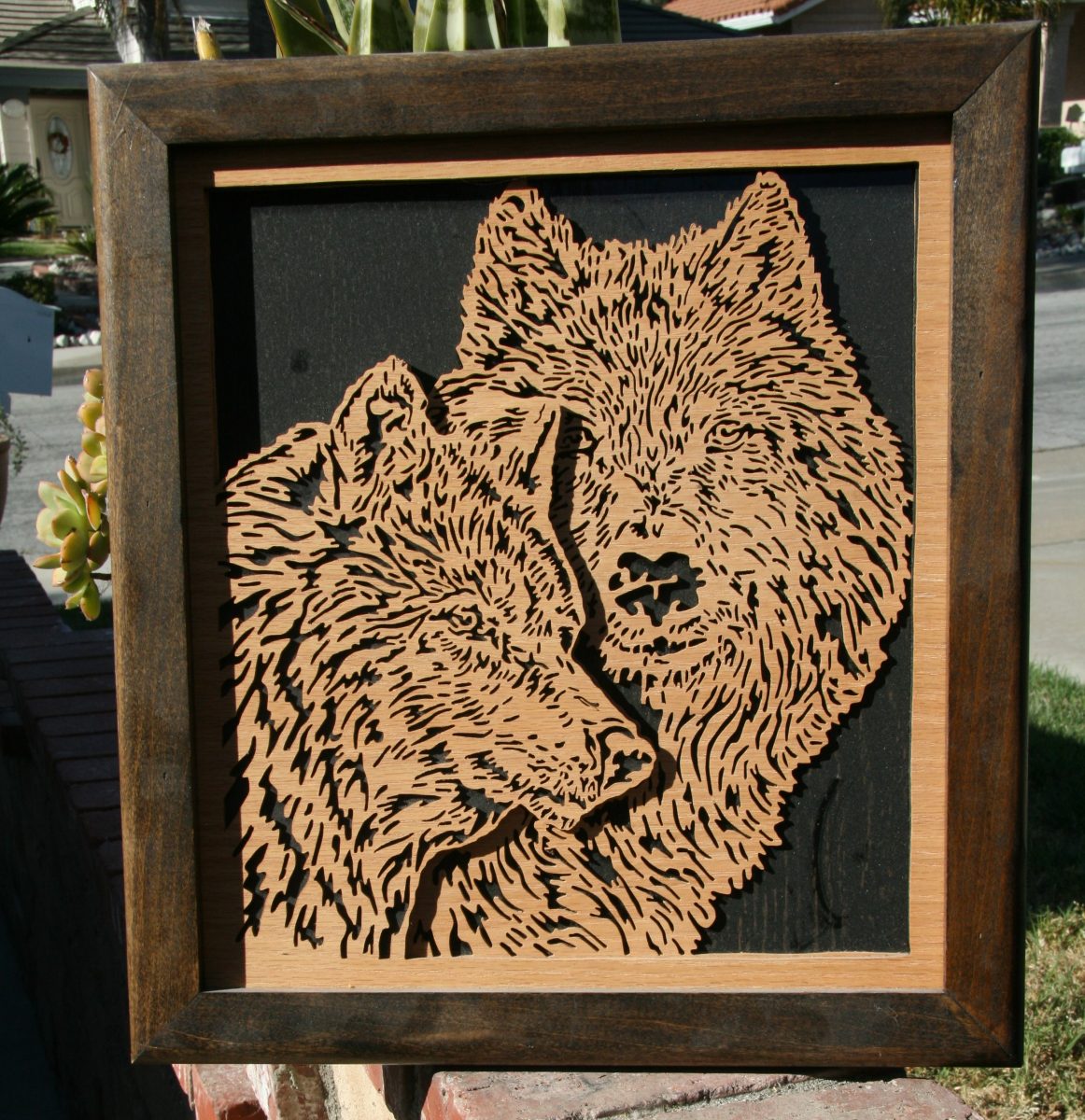
The City of Santa Clarita is proud to announce its latest art exhibition, “The Art of the Cut” by James McGuire on view at The MAIN (24266 Main Street) now through May 6, 2026. This exhibition features intricate; hand crafted scroll saw works that highlight the natural beauty and character of wood through detailed patterns and precise craftsmanship.

For James McGuire, woodworking is both a craft and a conversation with the material itself. Each piece begins as a simple board and is transformed through careful cutting and thoughtful design into complex forms. His process requires patience, focus and meticulous attention to detail, resulting in works that invite viewers to slow down and appreciate the artistry found in small, deliberate moments.

​ McGuire shares, “I enjoy scroll sawing because it requires patience and focus. Each piece comes together one cut at a time, and concentrating on the pattern allows me to slow down and block out everything else.” His work reflects this meditative approach, where craftsmanship and creativity come together to reveal the hidden potential within each piece of wood.

James McGuire has practiced the art of fretwork for nearly 50 years, developing a style defined by precision and dedication. His work has evolved from simple designs to highly intricate compositions featuring hundreds of individual cuts, often taking weeks to complete. Today, he shares his work at craft fairs throughout the region and continues to explore the expressive possibilities of wood through his detailed creations.

The featured artwork attached to this release is entitled “Two Wolves” by James McGuire.

“7th Circuit” Exhibition

 February 4, 2026 – March 3, 2026

Canyon Country Community Center, 18410 Sierra Hwy, Santa Clarita, CA 91351

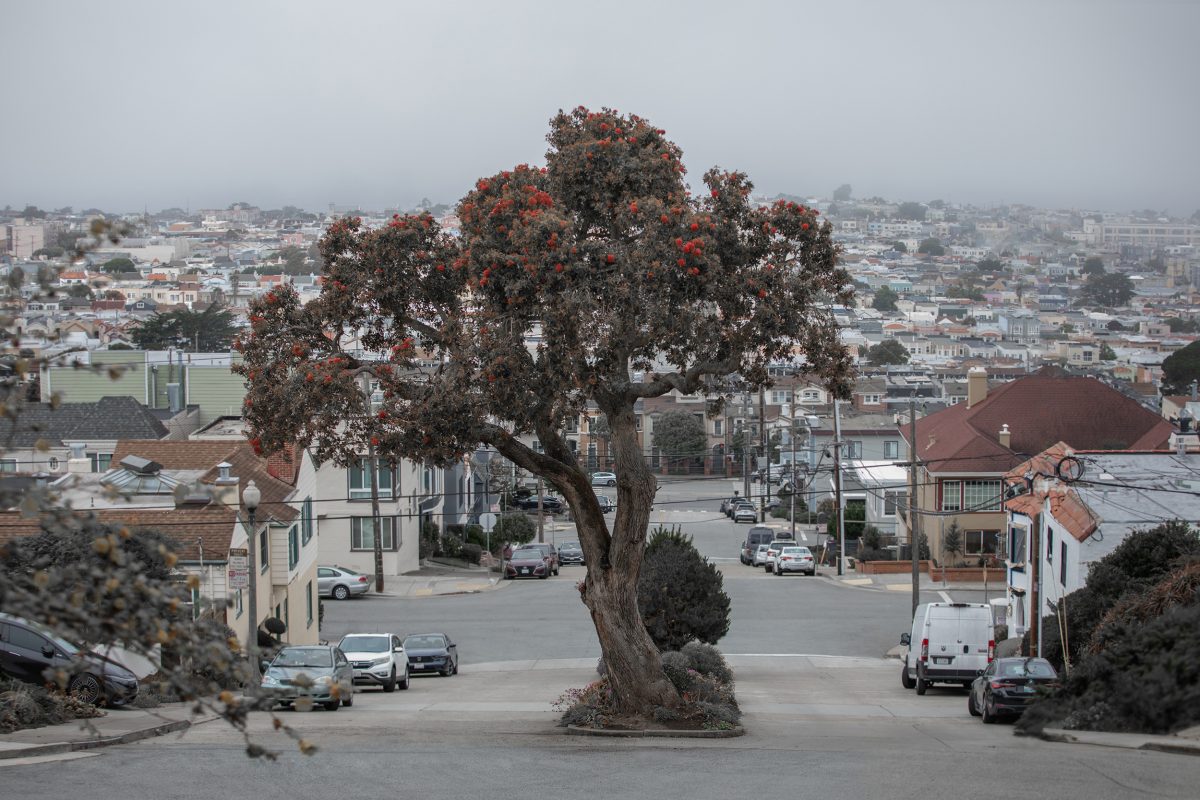
The City of Santa Clarita is pleased to present its latest art exhibition, “7th Circuit,” by Yuliia Savenko on view now through March 3, 2026 at the Canyon Country Community Center (18410 Sierra Hwy). This photography exhibition invites viewers into a meditative visual space where familiar perceptions dissolve and meaning emerges through contemplation rather than certainty.

In “7th Circuit,” Savenko presents fog-shrouded urban landscapes that blur the boundary between reality and abstraction. Familiar city forms dissolve into mist, disrupting habitual ways of seeing and encouraging viewers to actively engage in the act of perception. As details fade, the mind fills in what is missing—transforming observation into a creative, introspective experience. The resulting images offer a meditative pause, where ambiguity replaces clarity and meaning emerges through personal reflection.

Yuliia Savenko, born in Ukraine, is a multidisciplinary artist working across photography, painting, video, and installation. Her practice explores vulnerability, presence and the space between inner experience and external reality. She holds a BFA in Photo-Video Art and Graphic Design from the Kyiv National University of Technology and Design and has exhibited extensively at major cultural institutions throughout Ukraine and Europe.

The image attached to this press release is titled “Urban Relic” by Yuliia Savenko.

“I’m a Part of Nature” Exhibition

January 28, 2026 – April 15, 2026

Valencia Public Library, 23743 Valencia Blvd, Valencia, CA 91355

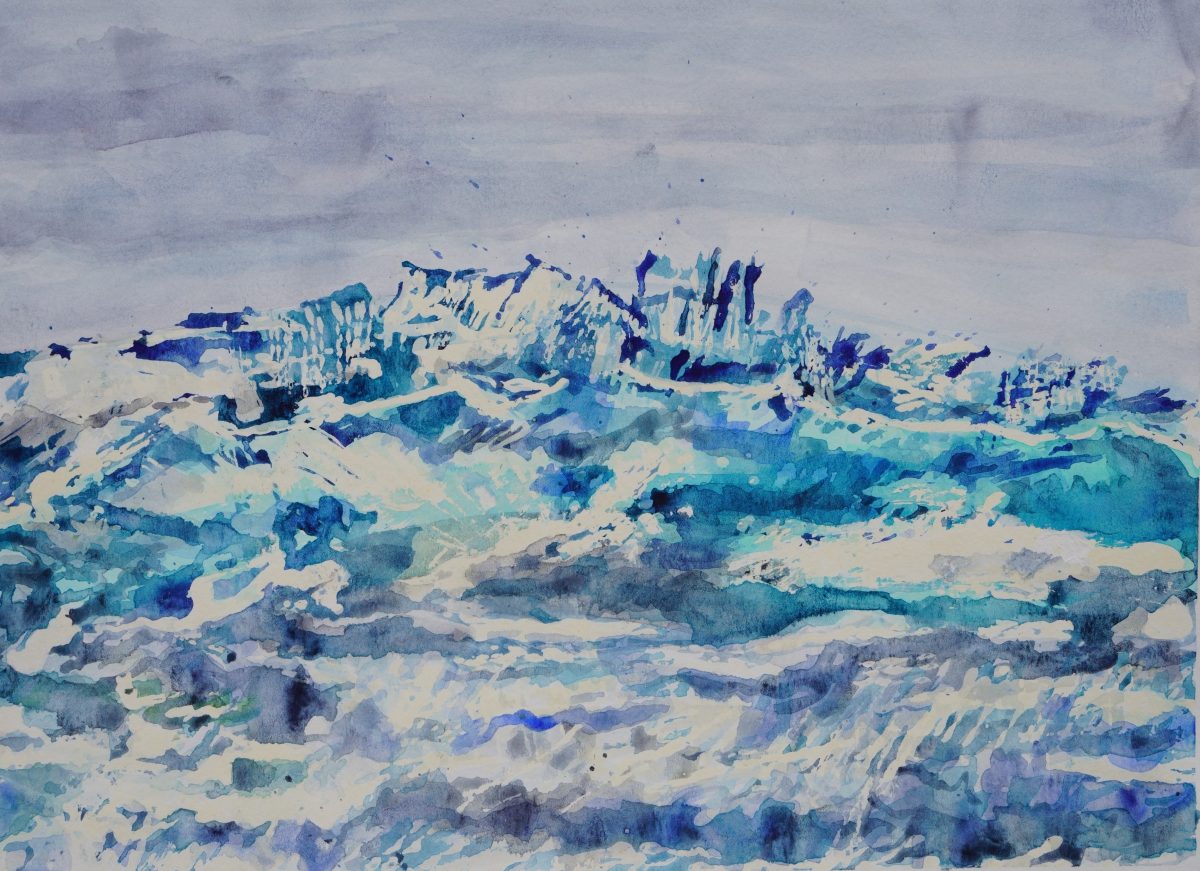
The City of Santa Clarita is pleased to present “I’m a Part of Nature,” a solo exhibition by Keiji Ichikawa, on view at the Valencia Library (23743 Valencia Boulevard) now through Wednesday, April 15, 2026. This exhibition invites viewers to reflect on humanity’s deep connection to the natural world through expressive, color-driven paintings inspired by lived experience and observation.

“I’m a Part of Nature” features a series of recent acrylic works that interpret real landscapes through emotion, memory and sensory perception rather than literal realism. Keiji’s paintings are rooted in the belief that humans do not own nature, but belong to it—a philosophy shaped by his childhood in Tokyo during a period of heavy pollution and reinforced through a lifetime of travel and artistic exploration. Drawing from sketches and photographs made on-site, Keiji allows color, intuition and his “six senses” to guide each composition, resulting in works that balance structure with abstraction.

Born in Japan and later living in Paris before settling in Southern California, Keiji brings a global perspective to his practice. Influenced by his parents’ work as traditional kimono artisans, he uses a limited palette of primary colors to build layered, expressive scenes. Often including a small painted self-figure within each work, Keiji invites viewers into the space of the painting, encouraging contemplation and personal connection.

Website: www.atelierkeiji.com

Social Media: @atelierkeiji

“Saving Endangered Wildlife Through Fine Art” Exhibit

January 28, 2026 – March 30, 2026

Old Town Newhall Library, 24500 Main St. Santa Clarita, CA 91321

The City of Santa Clarita is pleased to present its latest art exhibition, Saving Endangered Wildlife Through Fine Art,” by Sherif Hakeem on view now through March 30, 2026 at the Old Town Newhall Library Branch (24500 Main Street). This exhibition features hyper-realistic charcoal drawings that spotlight endangered wildlife and invite viewers to reflect on humanity’s responsibility to protect the natural world.

Through meticulous detail and striking realism, Hakeem’s work captures wildlife not as illustrations, but as living beings deserving of care and preservation. By employing hyper-realism, his drawings often resemble photographs at first glance—an intentional approach that draws viewers closer and sparks deeper engagement with the subjects portrayed. Each piece encourages conversation not only about artistic technique, but about conservation, environmental loss and the urgent need to protect vulnerable species.

Hakeem’s mission extends beyond visual impact. Portions of artwork sales from the exhibition will benefit wildlife sanctuaries and conservation efforts, transforming each piece into both a work of fine art and a call to action. “I don’t see these animals as drawings,” Hakeem shares. “I see them as real beings who cannot speak for themselves, and my work is a way to give them a voice.”

Instagram: @sherifhakeem

Website: https://fineartforawareness.com

“Make Life Beautiful” Exhibition

January 20 – April 1, 2026

The MAIN, 24266 Main St, Santa Clarita, CA 91321

ANNOUNCEMENT: “Make Life Beautiful” by Aaron Koscelansky has been extended to April 1, 2026.

The City of Santa Clarita is proud to announce its latest art exhibition, “Make Life Beautiful” by Aaron Koscelansky on view at The MAIN (24266 Main Street) now through March 2, 2026.

“Make Life Beautiful” is a collection of intricate, psychedelic mandalas and geometric compositions designed to captivate the senses and encourage deep reflection. Each piece is hand-painted on canvas, ranging in size from small (6” x 6”) to large (36” x 48”), using acrylic, fluorescent, and UV-reactive paints. The artworks feature layered symmetry, vibrant color transitions, and hypnotic patterns that invite viewers into a meditative visual journey.

This exhibition explores the relationship between color, symmetry, and consciousness. Mandalas have long been symbols of unity and transformation, and this collection embraces that tradition while infusing it with a modern, psychedelic aesthetic. The use of fluorescent and UV-reactive paints adds an interactive dimension, allowing the works to shift and evolve under different lighting conditions. The pieces are designed to be uplifting and immersive, encouraging viewers to find moments of stillness and inspiration within the complexity of each design.

Q&A with Aaron Koscelansky

The title of your exhibition is “Make Life Beautiful.” What does that phrase mean to you personally and artistically?
“Make Life Beautiful comes from a project I started in Lancaster, CA. There was an open desert behind my apartment complex that would often attract illegally dumped items. I didn’t have the manpower or machinery to remove it all myself, but I did want a more appealing looking neighborhood. I started taking Posca markers on my walks through the desert and would find items to draw on. The idea was to take items that had been discarded, give them new life through creativity, and showcase them as art pieces, leaving them where they were dumped but with a new design. Intentionally making life around me more beautiful. I would leave my Instagram handle (@psychedelicwatermelon) on the pieces I created, and every once in a while, I would receive a message from someone who found an item I had drawn on and taken it home. With a little bit of intentionality, someone’s trash had become someone else’s art.”

Do you have a favorite piece in this exhibit?
“Wavelength of Bees.”

How do you begin your creative process?
“I find an item or canvas that interests me. They can be found, thrifted, or bought, and I’ll usually begin with choosing colors and painting a background. The bright backgrounds of my pieces come first, then I sit with the item/canvas until an idea arrives for what will become the focal point of the piece.”

Who or what are your biggest artistic influences?
“My artistic influences come from lived experience. I enjoy bright colors, symmetry, movies, astronomy, nature, stand up, podcasts and music. I love anything that brings a sense of novelty and joy to everyday life.”

Your work features intricate mandalas and geometric symmetry. What draws you to these forms?
“I’m a fan of psychologists like Jung. He, “felt certain that mandala drawing has the function of integrating psychological division, enhancing psychological harmony, and preserving personality integrity.” I started drawing mandalas after a very difficult period in my life. I also found it had a calming, stay-in-the-present effect. I found myself being able to work for up to five hours on a mandala piece with little to no breaks, and sometimes even without background noise, becoming more comfortable working in silence.”

Do you plan your geometric patterns ahead of time or allow them to evolve as you paint?
“I’ll usually draw the overall shape of the mandalas with a pencil before going in with markers or paint. However, the details within them, like dot work or highlights, evolve as I work.”

What tools or techniques do you use to achieve such precise symmetry and layering?
“I use a compass, or sometimes any circular household object to get the main proportions of the mandalas accurate. A ruler will sometimes be used for longer straight lines. Otherwise, all of my work is hand drawn without stencils, projectors, or VR.”

Your work uses fluorescent and UV-reactive paints. What inspired you to experiment with these materials?
“I enjoy artwork that can play with different light. I’ll use fluorescent, UV-reactive, and metallic elements in my paintings to help bring extra depth to the pieces; allowing the viewer to have different experiences with the same piece depending on which lighting is being used. Like a play-off of 1960’s psychedelic, neon posters.”

What do you hope viewers feel when they experience your work?
“A sense of joy, or a moment or relaxation. I find that children tend to be drawn to my artwork due to the bright colors or my periodic use of cartoon characters they might recognize. But overall, I just want to bring a little joy to the world through my creativity. Making the world a little bit more beautiful through art.”

What is the best piece of advice you have received as an artist?
“You should enjoy the process more than the destination. Fall in love with the journey not the result.”

“Let Go” Exhibition

December 2, 2025 – February 4, 2026 

Canyon Country Community Center, 18410 Sierra Hwy, Santa Clarita, CA 91351

“Let Go” by artist Dani Samson is a series of collages created through an intentional act of surrender.  Samson states “Using a diverse array of materials, I enlist gravity as my collaborator, dropping cut elements onto a surface and gluing them down exactly where they land. By relinquishing control, I suspend my thoughts and conditioned habits, allowing surprising compositions to emerge. This process yields arrangements that challenge my expectations, often leading to captivating material interactions that bring new depth and complexity to the work. Much like life itself, this series explores the cycle of choice, chance, acceptance, and interpretation. Each viewer brings their own perspective, assigning meaning in the same way I do when stepping back from the work. I invite audiences to spend time with these pieces, asking themselves: What could it be? What could it mean to me?”

Links to Dani Samson’s Media related to “Let Go“:

The artwork attached is titled “Portal”

Q&A with Dani Samson 

How do you usually start your creative process?
“In most of my practice, my process begins with a basic structure that I build from, such as a sketch or a reference image. There’s usually a lot of thought and intention behind how I arrange my materials, which often span multiple mediums. While I allow for looseness and moments of discovery, I tend to assert a fair amount of control over the outcome. What’s unique about the Let Go series is how radically simple the process is: gather collage materials, drop them, glue them, and observe the result. I have very little control, which makes this approach highly unusual for me.”

What is the best piece of advice you’ve received as an artist?
“There are many ways I could answer this, but one piece of advice has consistently carried me through my practice: fully own what you do. When I was first developing my creative voice, I felt self-conscious and uncertain about my work and its meaning. It’s easy, as an artist, to question the validity of what you make, how you make it, or why you make it. But leaning into your instincts, trusting your voice, and releasing shame around your work is essential. Your perspective is enough, exactly as it is.”

You use gravity as a collaborator by dropping cut elements and gluing them exactly where they land. How did you develop this technique, and what surprised you most when you began using it?
“In 2024, I challenged myself to intentionally cultivate certain qualities in both my life and my practice. One of those qualities was play. I initially approached this method as a fun exercise rather than a formal technique. I dropped the pieces simply to see what might happen. By the time I finished the first piece, I was genuinely laughing out loud with delight. The results were far more compelling and beautiful than I had anticipated, and I was surprised by the cosmic profundity of it.”

Have you ever been tempted to intervene after the pieces land, or is the commitment to “no adjustments” part of the integrity of the work?
“I am definitely tempted! But I very rarely make adjustments. Once in a while, I will flip a piece over if it lands “face down” (or what I think is face down). Other than that, I trust the process and let it be.”

How do you decide when a piece is finished, especially when chance dictates so much of the composition?
“Because I select all of the collage materials before I begin, the ending is already determined. The piece is finished when every chosen element has been used. Deciding how many pieces to select at the start is intuitive, guided by a feeling of “this is enough.” Knowing when a work is complete is an important skill in my practice overall, but in this series, the parameters make that decision more straightforward.”

Pop Culture Exhibition

December 16, 2025 – March 25, 2026

Newhall Community Center, 22421 Market St, Newhall CA 91321 

“Pop Culture” juried exhibition will be on view at the Newhall Community Center from December 16, 2025, through March 25, 2026. This exhibition celebrates the icons, imagery, and influence of pop culture—inviting artists to explore how entertainment, media, fashion, and technology shape our collective identity. From nostalgic references to contemporary commentary, “Pop Culture” encourages artists to reflect on the trends, symbols, and stories that connect us through shared experiences. The exhibition highlights the creative energy of everyday life and celebrates the ways popular culture continues to inspire, challenge, and unite us through art.

Travel and Adventure Exhibition

December 9, 2025 – March 4, 2026

City of Santa Clarita City Hall, 23920 Valencia Blvd #120, Valencia, CA 91355

The City of Santa Clarita is pleased to present its latest art exhibition, Travel and Adventure,” on view in the First Floor Gallery at City Hall (23920 Valencia Boulevard) now through March 4, 2026. This juried showcase celebrates the spirit of exploration, inviting viewers to experience the beauty, culture and wonder of places around the world through the eyes of artists. From bustling streets and iconic landmarks to remote coastlines, vintage transportation and foods that tell a story, “Travel & Adventure” highlights the universal joy of discovery and the connections we forge while exploring our world.

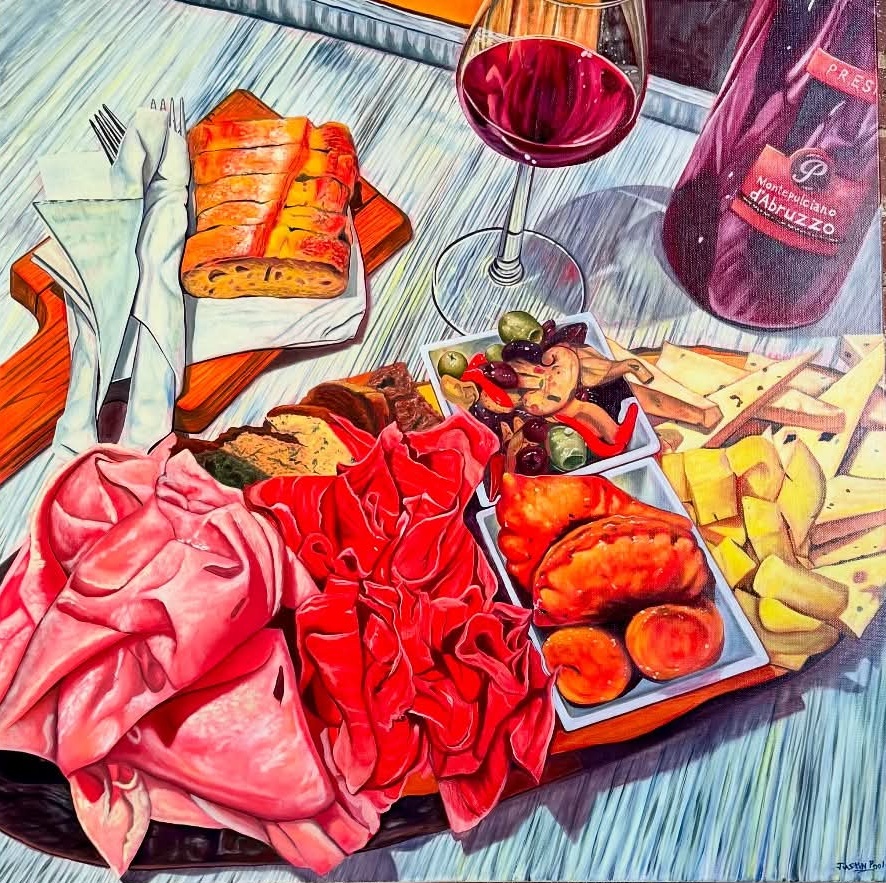
Among the featured artists is Justin Poole, whose vibrant oil-on-canvas works transform real locations into imaginative, dreamlike landscapes. “Although most of my work is inspired by real places to which I have traveled, I aim to capture a romanticized, dreamlike world with vibrant colors and unexpected juxtapositions. I hope that this work inspires people to go out into the world and make their own adventures,” Poole shares.

Also featured is photographer Nima Kharrazi, whose work reflects the emotional resonance of travel. Kharrazi states, “I feel as though, the more one travels, the more one feels connected to the whole of the world. You meet interesting people, you hear new sounds and you get to experience a different version of your daily adventure. Every day is a gift — why not surprise yourself from time to time? These are my surprises.”

The exhibiting artists include Ashleigh Abrams, Faye Abharian, Shiva Asrari, Joel Bareng, Sue Bozman, Lisa Broadway-Chow, Marita Braun, Catherine Carstens, Ryan Cheney, John Cowan, Meryl Goudey, Hope Horner, Keiji Ichikawa, Nima Kharrazi, Corissa Leeds, Allison Lauricella, Mellie Lewis, Eliska Makovicka, Mark Micchio, Jane Mick, Freda Morrison, Nancy Perkins, JJ Pomegranate, Justin Poole, Rick Quinn, Debora A. Roselli, Olga Shiller, Miki Stromberg, Tesha Smith, Rose Smither, Jayme Sun Thomas, Izik Vu, Naomi Young and Mia Zumsteg.

The featured photo is “Venice Canal” by Justin Poole.

Persona Grata: Portraits Exhibition

November 19, 2025 – January 14, 2026

The MAIN, 24266 Main St, Santa Clarita, CA 91321

The City of Santa Clarita is proud to announce its latest art exhibition, “Persona Grata: Portraits” by Heidi Brueckner on view at The MAIN (24266 Main Street) now through January 14, 2026. This collection features large-scale, colorful oil and mixed-media figurative paintings that explore humankind’s understanding of itself and its relationship to storytelling.

Brueckner’s bold portraits present individual narratives through self-presentation, gesture, and expression, inviting viewers to reflect on the universal act of observing others as a way of better understanding ourselves. Her assertive use of color is intentionally divorced from naturalism and used as a metaphor for shared Humanity. The work is further animated through unconventional surfaces, including unstretched canvas, recycled bubble mailers, and found materials that billow slightly when hung, adding movement and texture to each piece.

​Drawing from an empathetic, documentary-like approach, Brueckner honors the dignity of her subjects while simultaneously disrupting traditional portraiture with unexpected spatial relationships, sculpted fabrics, sequins, and other playful mixed media elements. Her practice blends contemporary expression with socio-environmental awareness, integrating post-consumer materials as both artistic texture and commentary on interconnectedness, value, and sustainability.

The featured artwork attached to this release is entitled “It’s Raining Love” by Heidi Brueckner.

Q&A with Heidi Brueckner 

How do you usually start your creative process?
“I usually start with choosing a human subject either from life or from a personal photo. I may do some initial compositional sketches to get an idea of the overall form of the design. I then do a fair amount of intuitive work searching for mixed media materials or substrates and developing color schemes for each section of the work which I feel are appropriate to my overall vision.”

What is the best piece of advice you’ve received as an artist?
“Hang in there! Just keep doing what you want. Not everyone will get or like your work—that’s ok. Trends in the art world come and go. Maybe at one point your work will align with it, maybe not. Do it for yourself and as a way to enrich your life. That is the most important part of artmaking.”

Do you have any tips for artists starting out?
“Do what you love to do and plan for spending time working at getting better at it. Set a schedule for creating art. That dedication I believe becomes apparent in the work. Having said that, it’s easy to feel that you are not doing enough if you can’t dedicate yourself to art full-time. I have learned to set realistic, and therefore achievable, goals and expectations for myself. Meeting those goals feels very productive and puts me into a healthy mindset. I can then choose to surpass those realistic goals if I am able, which also feels great. Apply for as many art opportunities as you can and look at it as a numbers game. There will be a certain (larger) percentage that you will fail at and there will be some (smaller) percentage that will go your way. I really try to not take all of it too personally or overthink rejection. Accepting the fact that not everyone will respond to your work is actually really freeing. Do it for yourself. Also, expect to not expect when and where something positive will happen. I have also learned that the accolades are definitely not something one should base their self-worth on, and that’s why it is really important to be grounded in the work and what it does for your own experience in life.”

Do you have a favorite piece in this exhibit, if so, why is it your favorite?
“I don’t think I have a favorite, but I can say “Lounging in the Lot” is one of my favorites. It is a portrait of my son taking a break from skateboarding in a flea market lounge chair. Blind contours of my face and hands are in the clouds watching over him. Also, among the fabrics and papers included, there are remnants from his clothing from growing up that are integrated into the background which makes the work very personal.”

How do you hope viewers connect with this exhibit?
“My work at its core is about humankind’s understanding of itself. I study human nature, and its relationship to storytelling. These portraits are individualistic narratives which explore personage through self-presentation, facial expressions, and gesture. The work often challenges dominant social hierarchies by focusing on the under-revered, and appreciating the subject’s presence and dignity, giving pause to honor the person. The aesthetic is assertive, and the color is divorced from naturalism. Skin color is therefore eliminated which I believe is metaphorical for the hope that society aspires to, and achieves, equality among races and other kinds of human differences. The work is meant to honor the entirety of humanity—not just one section of the population or kind of person. I also see the integration of post-consumer waste of our globalized culture as a socio-political act which expresses our interconnectedness in what that we consume and waste but also compares what we consider treasure or trash. Ultimately, the paintings venerate the individual, and I view the work as being about Love, the kind of love that gives grace and understanding to individuals for what and who they are, including all their wonderment and imperfections. Another goal is to inspire working for a more socially and environmentally just world, encouraging people to appreciate and love one another, and to understand the importance of social justice and respect for our earth and all its creatures.”

You use unconventional surfaces like unstretched canvas, recycled bubble mailers and found materials. What inspired this shift away from traditional substrates?
“I started experimenting with some alternative substrates when a large amount of detritus was generated in my home during the Covid-related shutdown. In an effort to recycle, I started by using paper bags because for a while we weren’t allowed to bring used bags back to grocery stores. I then switched to using pieced-together Amazon bubble mailers because of them piling up from all the online ordering. After a while, I started to see the integration of post-consumer waste of our globalized culture in my work as a socio-political act which expresses our interconnectedness in what we consume and waste but also compares what we consider treasure or trash. Painting on alternative recycled materials as substrates and introducing other recycled mixed-media elements such as paper, sculpted fabric, and found objects into my portrait paintings have really opened up creative possibilities and expression in the work and also have added a uniquely contemporary and environmentally friendly component.”

Are there any new materials, stories or approaches you’re eager to explore?
“In more recent paintings, I have started experimenting with the overall shape of the paintings beyond the “square”, and also with adding more substantial 3D elements, like sculpted fabrics, which offer a higher relief element to the images. This experimentation has helped me feel that there are unlimited possibilities in my chosen genre of portraiture. It has enabled me to follow whimsical tangents of materiality while being challenged with integrating those ideas with the more traditional medium of paint which is often used to suggest illusionism. I am soon travelling to India and hope that the travel photography I do there will provide a new jumping off point for the work.”


Go to Top